Shared Hosting Explained Simply for Beginners in 2026
Starting a website for the first time can feel confusing, especially when hosting companies throw around terms like shared hosting, cloud hosting, VPS, bandwidth, and cPanel.
Most beginners simply want something affordable that works.
That’s exactly why shared hosting is still one of the most popular hosting options in 2026.
But there’s also a lot of confusion around it.
Some people say shared hosting is too slow. Others say it’s perfect for beginners. And many new website owners don’t really understand what they’re buying in the first place.
In this guide, we’ll break down what shared hosting actually means, how it works, its pros and cons, and whether it’s still worth using today.
Quick Answer: What Is Shared Hosting?
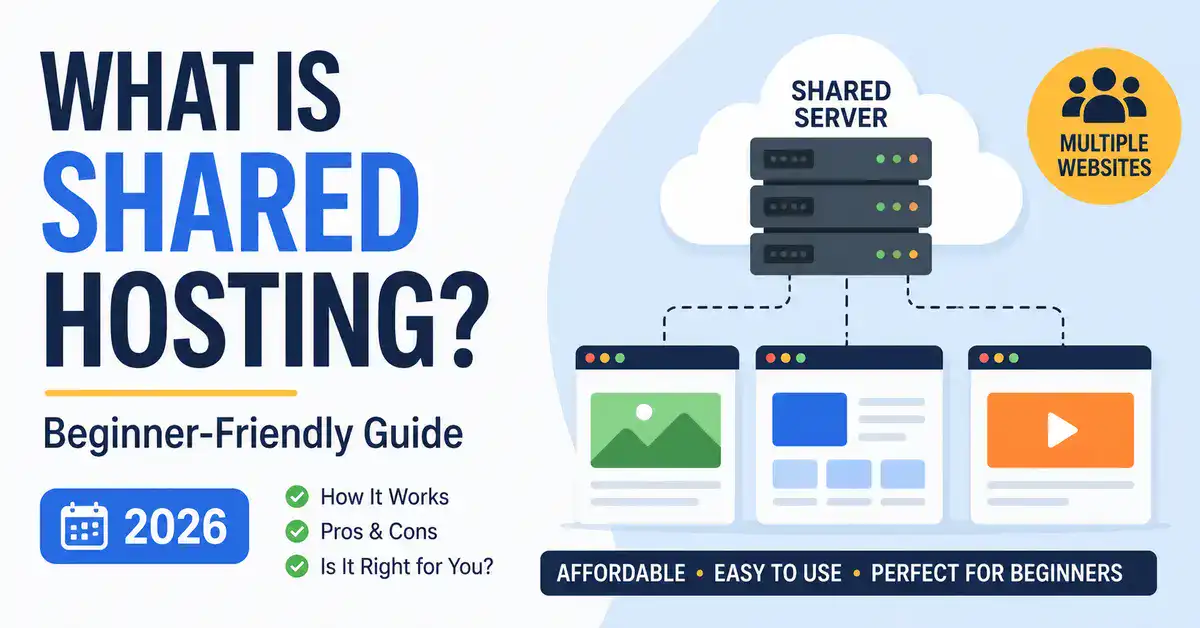
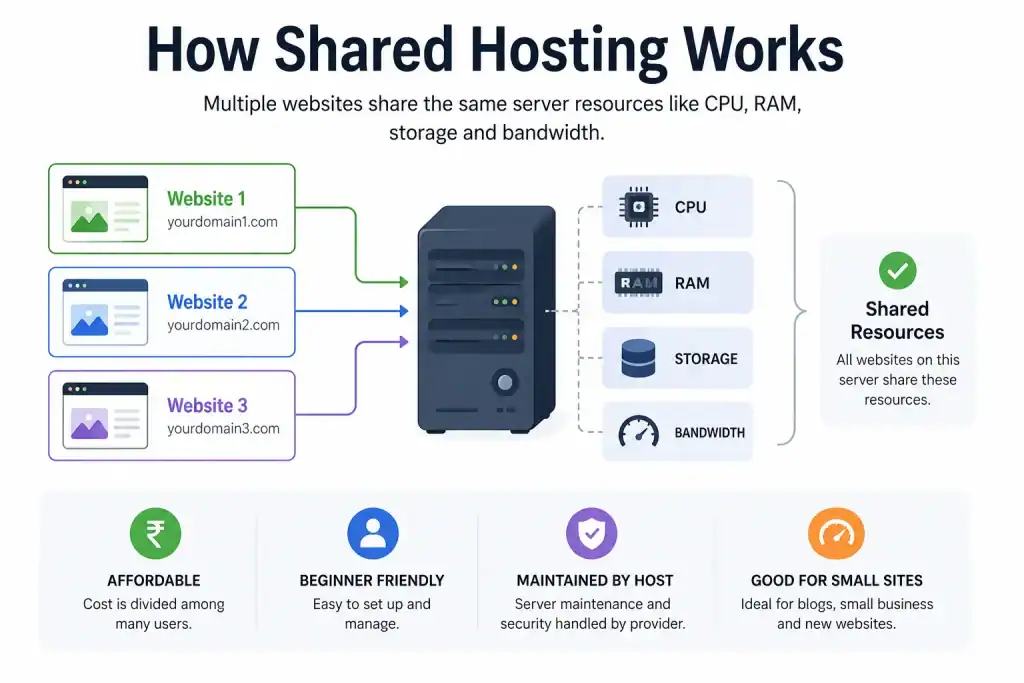
Shared hosting is a type of web hosting where multiple websites share the same server resources, including CPU, RAM, storage, and bandwidth.
Because many users share one server, hosting companies can keep prices very low. That’s why shared hosting is usually the cheapest hosting option for beginners.
It’s commonly used for:
- Beginner blogs
- Small business websites
- Portfolio sites
- Low-traffic WordPress websites
| Feature | Shared Hosting | Cloud Hosting |
|---|---|---|
| Cost | Lower | Higher |
| Beginner Friendly | Yes | Moderate |
| Performance | Basic | Better |
| Scalability | Limited | High |
| Best For | New websites | Growing websites |
How Shared Hosting Works
Think of shared hosting like living in an apartment building.
You have your own apartment, but everyone in the building shares the same infrastructure:
- Electricity
- Water system
- Elevators
- Parking
- Internet connection
Shared hosting works similarly.
Your website gets its own space on a server, but the server’s resources are shared with many other websites.
This is what makes shared hosting affordable.
However, it also means:
- Performance can vary
- Slow websites on the server can affect others
- Resource limits exist
For beginners, though, this tradeoff is often completely reasonable.
Why Shared Hosting Is So Popular:
- Manage servers
- Configure advanced systems
- Maintain infrastructure manually
Hosting companies handle:
- Server maintenance
- Security basics
- Uptime monitoring
- Software updates
- Control panels
That simplicity is exactly why most beginners start with shared hosting.
Choosing the right hosting provider matters just as much as choosing the hosting type itself, especially if you’re launching your first website. That’s why many beginners also explore beginner-friendly hosting recommendations before making a decision.
Who Should Use Shared Hosting?
Shared hosting is usually a good choice for:
| Website Type | Good Fit? |
|---|---|
| Beginner Blogs | Yes |
| Small Business Sites | Yes |
| Portfolio Websites | Yes |
| New Affiliate Sites | Yes |
| High-Traffic Ecommerce Stores | No |
| Large Membership Platforms | No |
If your website is still new and receives limited traffic, shared hosting is often more than enough.
Many beginners overpay for advanced hosting they don’t actually need yet.
Pros of Shared Hosting
Affordable Pricing
This is the biggest advantage.
Many shared hosting plans cost less than a monthly coffee subscription.
That low entry cost makes it easier for beginners to:
- Start blogging
- Learn WordPress
- Test niche ideas
- Experiment online
Beginner-Friendly
Most shared hosting providers offer:
- One-click WordPress installation
- Simple dashboards
- cPanel access
- Beginner support
You don’t need technical experience to get started.
Easy Website Management
Shared hosting usually includes:
- Email setup
- File management
- Backups
- SSL certificates
- Database management
All inside one dashboard.
Good Enough for Most New Websites
A lot of beginners assume they need expensive hosting immediately.
In reality, many websites can comfortably run on shared hosting for a long time before needing upgrades.
Especially:
- Blogs
- Informational websites
- Local business websites
Cons of Shared Hosting
Performance Can Be Limited
Since many websites share the same server, performance can sometimes slow down.
This becomes noticeable when:
- Traffic increases
- Websites use too many resources
- Server quality is poor
Cheap hosting providers are especially known for overcrowding servers.
Limited Scalability
Shared hosting works well initially, but eventually, growing websites may outgrow it.
As traffic increases, websites may need:
- Cloud hosting
- VPS hosting
- Managed WordPress hosting
Security Risks
Although hosting companies add security protections, sharing a server can create additional risks compared to isolated environments.
Good hosting providers minimise this risk significantly.
Resource Restrictions
Most shared hosting plans have hidden limits like:
- CPU usage
- RAM limits
- Inode restrictions
- Traffic limits
Many beginners don’t notice these limitations until their site grows.
Shared Hosting vs Cloud Hosting
This is where many beginners get confused.
Here’s the simple difference:
| Shared Hosting | Cloud Hosting |
|---|---|
| Multiple websites share one server | Resources come from multiple connected servers |
| Cheaper | More expensive |
| Beginner-friendly | Better scalability |
| Good for small websites | Better for growing websites |
| Limited performance | More stable performance |
Shared hosting is usually the best starting point for beginners because it’s affordable and easy to manage.
Cloud hosting becomes more useful when:
- Traffic grows
- Speed becomes critical
- Websites become resource-heavy
As websites grow, many users eventually start comparing shared hosting with cloud hosting to understand which option offers better performance and scalability.
Is Shared Hosting Slow?
Not always.
This is one of the biggest misconceptions online.
The REAL issue is:
Low-quality shared hosting.
Some providers overcrowd servers aggressively to maximise profits.
That’s when websites become:
- Slow
- Unstable
- Frustrating
However, good shared hosting providers can still offer decent performance for beginner websites.
That’s why choosing the right provider matters more than the hosting type itself.
Many people assume all shared hosting is slow, but the real problem is often overcrowded, low-quality servers rather than shared hosting itself.
Why Many Beginners Regret Buying the Cheapest Hosting
One of the biggest mistakes beginners make is choosing hosting purely based on the lowest price.
At first, ultra-cheap hosting plans can seem attractive because they promise:
- Low monthly costs
- Free domains
- Beginner-friendly setup
But many users later run into problems like:
- Slow loading speeds
- Poor customer support
- Hidden renewal pricing
- Website downtime
- Overcrowded servers
This is why hosting quality matters more than just price alone.
For small websites, shared hosting itself usually isn’t the problem. The real issue is often low-quality hosting providers trying to fit too many websites onto the same server.
That’s why it’s important to balance:
- Affordability
- Reliability
- Long-term value
Instead of choosing hosting based only on the cheapest offer available.
Common Mistakes Beginners Make With Shared Hosting
Choosing Only Based on Price
Many people buy the cheapest plan available without checking:
- renewal pricing
- server quality
- customer support
- uptime reputation
This often leads to problems later.
Many beginners only notice hosting quality problems after their website starts slowing down or facing downtime during traffic spikes.
Ignoring Renewal Costs
Some hosting plans look extremely cheap initially, but become expensive after renewal.
Always check long-term pricing.
Installing Too Many Plugins
Even good shared hosting can struggle if a WordPress website becomes overloaded with unnecessary plugins.
Expecting Enterprise-Level Performance
Shared hosting is designed for beginners and smaller websites.
It’s important to have realistic expectations.
New website owners often run into avoidable hosting issues simply because they don’t fully understand how hosting environments work in the beginning.
Best Shared Hosting Providers for Beginners
Some beginner-friendly hosting providers commonly recommended include:
- Hostinger
- HawkHost
- Bluehost
- MilesWeb
The best option depends on:
- Budget
- Traffic goals
- Support quality
- Server location
- WordPress optimization
If you plan to build your site using WordPress, it’s also important to choose hosting optimised specifically for WordPress performance and ease of use.
When Should You Upgrade From Shared Hosting?
For most first-time bloggers, shared hosting is usually enough for months or even years before upgrading becomes necessary.
You may eventually need an upgrade if:
- Traffic grows significantly
- Website speed becomes inconsistent
- Your site handles ecommerce or memberships
- Resource limits become a problem
At that stage, cloud hosting or VPS hosting may make more sense.
A lot of website owners upgrade too early simply because marketing around cloud hosting makes shared hosting sound outdated.
Is Shared Hosting Still Worth It in 2026?
Yes, for most beginners, shared hosting is still one of the best ways to start a website affordably.
It’s:
- simple
- beginner-friendly
- low-cost
- easy to manage
The key is choosing a reliable hosting provider and understanding its limitations.
Shared hosting isn’t designed for massive websites, but it’s often more than enough for:
- New blogs
- Niche websites
- Affiliate sites
- Personal projects
- Local business websites
Final Thoughts
Shared hosting remains one of the easiest ways for beginners to launch a website in 2026.
Despite all the hype around cloud hosting and advanced server setups, most new websites simply don’t need expensive infrastructure immediately.
The smarter approach is:
- Start simple
- Learn the basics
- Grow gradually
- Upgrade only when necessary
For many beginners, shared hosting is the most practical first step into building an online presence.
FAQs
Is shared hosting good for beginners?
Yes. Shared hosting is specifically designed for beginners who want an affordable and easy way to launch a website.
Can shared hosting handle WordPress?
Absolutely. Most shared hosting providers support WordPress and even include one-click installation features.
What is the biggest disadvantage of shared hosting?
The main disadvantage is limited performance because multiple websites share the same server resources.
Is shared hosting safe?
Shared hosting is generally safe when using reputable hosting providers that include proper security measures.
When should I stop using shared hosting?
You may need to upgrade when your website traffic grows significantly or performance limitations become noticeable.